Compare your options
Keeping Mom safe at home: an honest look at what’s out there
At a glance
What each option covers
| Question | Wearable | Call button | Camera | Part-time carer | garden |
|---|---|---|---|---|---|
| Works without her remembering to wear, charge or press anything | No | No | Yes | Yes | Yes |
| Covers her around the clock, day and night | PartlyNot while it’s charging or off | PartlyOnly when it’s within reach | PartlyIf someone’s watching | NoOnly during visits | Yes |
| Gets help if she falls and can’t reach a phone or button | PartlyIf she’s wearing it | No | PartlyIf someone’s watching | PartlyWhile they’re there | Yes |
| Tells you first, not a stranger | PartlyDepends on the plan | PartlyDepends on the plan | Yes | PartlyIf they call you | Yes |
| Notices slow changes in her routine | No | No | PartlyIf you watch the footage | PartlyOn the days they visit | Yes |
| Protects her privacy | Yes | Yes | No | PartlyA visitor in her home | Yes |
| Covers the bathroom and bedroom too | PartlyIf she’s wearing it | PartlyIf one’s within reach | NoToo private for one | PartlyOnly during visits | Yes |
| Works when she’s out of the house | PartlyIf it has cellular | No | No | PartlyIf they go with her | No |
| Typical cost | $45–$90/mo1With fall detection | $35–$70/mo1No fall detection | One-time costSome charge to save video | $1,500+/mo2$6,700/mo full-time | $49/moHub, sensors and app |
Some families choose multiple solutions.
- 2026 monthly plan prices from major US medical alert providers. Wearables with automatic fall detection run from about $45 to $90 a month. In-home help buttons, which can’t detect a fall, run from about $35 to $70 on a cellular connection. Most also charge $100–$200 once for equipment or activation. From price reviews by SafeHome.org, SafeHome.org and SeniorLiving.org.
- In-home caregiver at the national median of $35 an hour: about $1,500 a month for two hours each weekday, or $6,700 full-time (44 hours a week). Local rates vary. CareScout Cost of Care Survey, March 2026.
Wearables
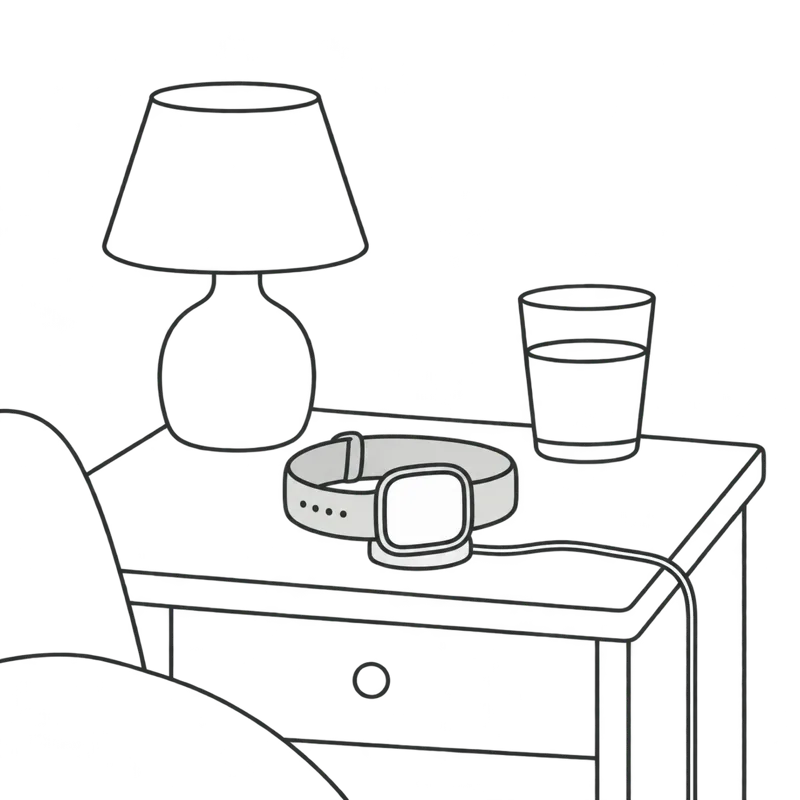
A pendant or smartwatch with fall detection
A very accurate automatic fall detection method, as long as she always has it on.
Where it helps
It can sense a hard fall on its own and call for help, and some models come with a cellular connection, so they work outside the house too. After a first fall, some people wear one faithfully.
Where it falls short
It only works if she puts it on and keeps it charged, every day. It comes off for bed and the shower, which is exactly when a lot of falls happen. Many parents find it bulky, or a reminder that they’re getting older, so it ends up on the nightstand. And for folks with memory issues, it’s impossible to be sure she’ll put it on consistently.
Alongside garden
If she’ll wear one, especially on the go, keep it. Garden covers the hours it’s charging or forgotten, and can alert you to changes over time.
Call-for-help buttons
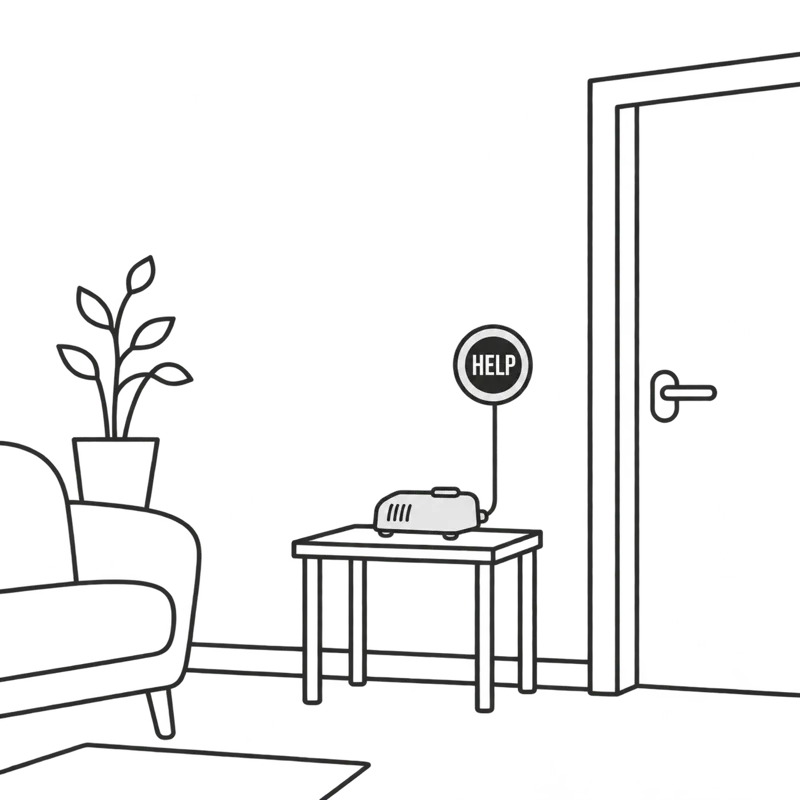
A help button on the wall or base unit
Easy enough in theory, but if it’s out of reach it does nothing. They’re also typically an ugly reminder that you’re getting old.
Where it helps
It’s easy to understand and puts her in control. One press reaches a person who can send help. Monitoring plans run about $35 to $70 a month, and most add a one-time fee of $100 to $200.
Where it falls short
After a fall she may be hurt, confused or on the floor across the room from it. Many parents don’t want to make a fuss, so they don’t press it, even when they should. Until it’s pressed, it tells you nothing about how she’s doing.
Alongside garden
With garden there’s nothing to reach. If she calls out, garden checks with her, then alerts you, so the first call is from family, not a stranger.
Cameras
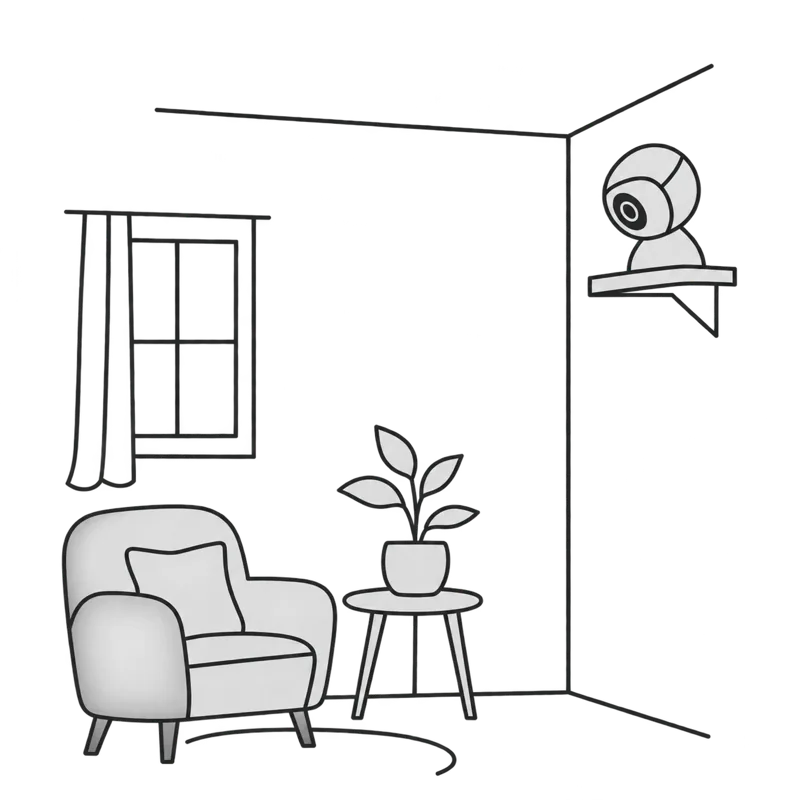
Indoor cameras linked to your phone
You can see everything, which is the problem.
Where it helps
You can check in and see exactly what’s happening. They’re easy to buy, and one at the front door is useful for deliveries and visitors.
Where it falls short
Most parents would feel watched, and even given the choice of cameras or risking an accident, will choose the accident. And nobody wants one in the bedroom or bathroom, where falls are most likely. On top of that, a camera only helps if someone is looking at it, so you end up tied to a feed. If you’re looking away for a few hours while on a drive or during a busy work day, you could miss a serious problem. Cameras also can’t keep track of subtle changes to her routine over time that might point to a more serious problem.
Alongside garden
A doorbell camera and garden work fine side by side. Garden can help cover blind spots and can get your attention both for acute situations and changes to her routine that might indicate a more serious problem.
In-home carers
A professional carer who visits
Having additional help is great, but most families can only afford a few hours, and some loved ones don’t want a stranger in their home.
Where it helps
A carer can cook, help with medication, notice when something’s wrong and physically help her. When she needs hands-on care, this is the answer.
Where it falls short
At a national median of $35 an hour, two hours every weekday is about $1,500 a month, and nights and weekends are still uncovered. Full-time care runs about $6,700 a month. You’re depending on a report from a carer that might come hours or even days after something goes wrong. On top of that, many parents don’t want a stranger in their home, and carers change, which can be unsettling.
Alongside garden
Garden covers the hours between visits, including overnight. Many families start with garden before they need a carer.
Where garden fits
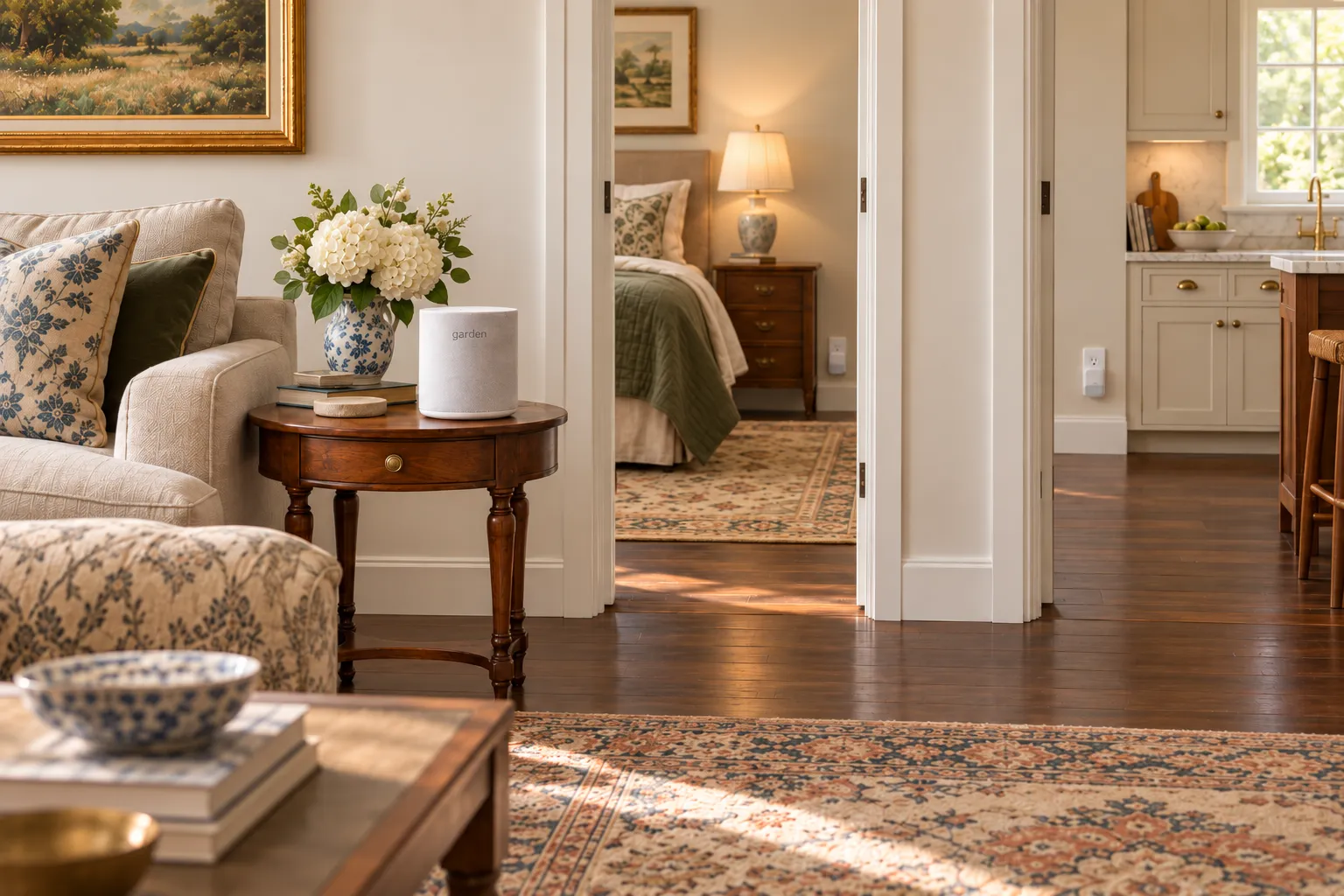
Nothing to wear, nothing to press, nothing watching her.
Garden listens for the sounds of her routine and for a call for help, then tells you when something seems off. Use it on its own or alongside what you already have.